|
 |
 |
 |
 |
 |
 |
 |
 |
 |
 |
 |
Research Groups | |||||||
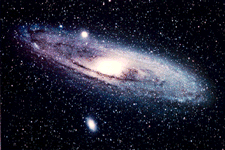
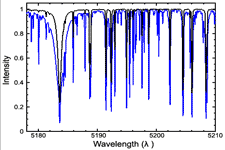
AstrophysicsOur research in astronomy and astrophysics focuses on studying the formation of our Milky Way Galaxy, using positions, velocities, and chemical compositions of stars. Additional astrophysics research on radio galaxy jets in included under computational physics.
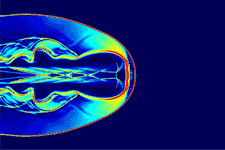
Back to top Much of the Department's research effort centers around unifying interest in computational physics. Members of this group are interested in the application of the methods of computational physics to a wide variety of research areas, including:
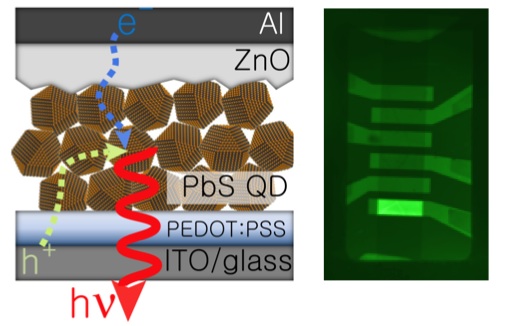
View Computational Physics research The materials physics group is interested in the experimental investigation of electrical, magnetic and optical properties of solids, with special attention paid to those materials which have application in device technology.
|
|||||||
|
Home | General Information | People | Research | BGSU Planetarium | Academics | Links |
|||||||