Astr 212: The Solar
System
Day 18:
Telescopes
I. Telescopes help us:
(a) Gather more light:
- human eye is small, doesn't let in much
light
- telescope is bigger, gathers more
light °
- Light Gathering Power goes as area of
mirror:
- related to
D2
- mirror 2x larger has 4x
LGP
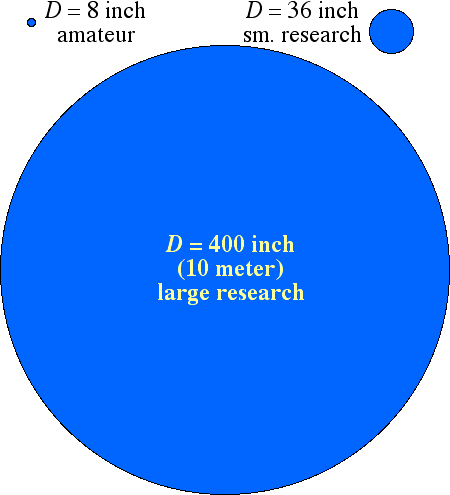
- larger mirrors gather more light
- see fainter objects & make new
discoveries
- provide more detail on known
objects
- learn more about
universe!
(b) Resolve & Magnify:
- like magnifying lens or
microscope:
- "zoom in" on objects with small
angular size
- study details
- learn more about
universe!
- larger telescopes make clearer
images
- resolve (see) finer
details
- quality lens/mirrors needed, but
expensive
- Earth's
atmosphere blurs images =
seeing
- less atmosphere = less
blurring
- put telescopes on high
mountains
II. Types of Telescopes:
(a) Refractor
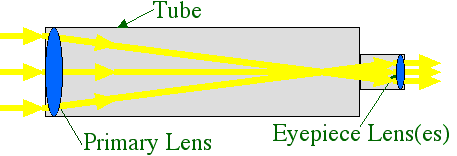
- uses lenses to bend light to focus
- advantages:
- easy to make small lenses
(Galileo)
- most telescopes before
1900
- common in amateur tels
today
- disadvantages:
- large lenses sag & distort (blur)
image
- have to grind both sides of lens:
expensive
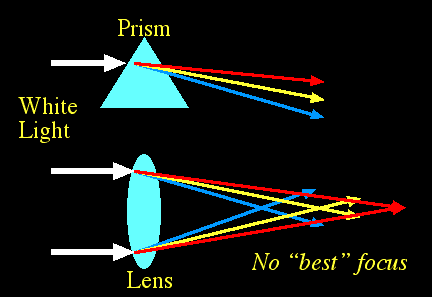
- chromatic
aberration
(b) Reflector
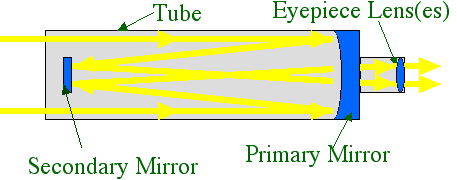
- uses mirrors to bend light to focus
- advantages:
- support large mirrors from back: no
sag
- no refraction, so no chromatic
aberration
- disadvantages:
- need high tech to coat mirrors: since
1900
III. Modern telescopes rely on Computer Control:
- track tel along w/ stars
better
- adjust shape of mirror for sag
- can use inexpensive, thin
mirrors
- made up of segments
or spin-cast
- sensor checks quality of image,
- computer determines adjustment to
mirror shape
- pistons behind mirror bend it to
correct shape
- active optics
- monitor and correct for star motion due
to seeing
- small mirror moves >30
times/sec
- adaptive optics
IV. Instruments used on Telescopes:
(a) Camera does imaging (taking pictures):
Before 1985, photographs
Today, use electronic cameras
- CCD (charge coupled
device)
- very sensitive to faint
light
- many tiny, electronic light-meters
(pixels)
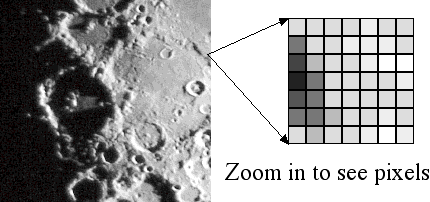
- digital:
- stored in computer memory
- measure w/ computer
- # photons gives magnitude
(brightness) of object
- more efficient than photos, see
fainter objects
(b) Spectrograph takes spectra:
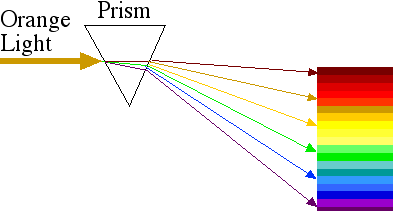
- spreads light into
wavelengths
- use CCD to take picture of
spectrum
- measure #photons (intensity of light) at
each wavelength.
V. Radio Telescope: (Fig.
6-18)
- large metal "dish" to reflect radio
waves
- large: 10-100s meters in
diam
- mesh or solid metal
- steer it to point anywhere in
sky
- antenna absorbs radio waves
- radio waves wiggle
electrons
- which are electric current
(AC)
- sends current along wire
to
- amplifier boosts electric
signal
- computer records signal (disc or
CD)
- make false color pictures
(maps).
Compared to optical telescopes, radio tels:
- much larger
- metal dish rather than glass
mirror
- don't "see" what human eye sees
- new way to look at
universe
VI. Space Telescopes:
- most see in other EM bands,
except...
Hubble Space Telescope (HST): (Fig.
6-25)
- moderate-sized (2.4m mirror)
- optical (visible light)
- orbits above Earth's
atmosphere
Advantages:
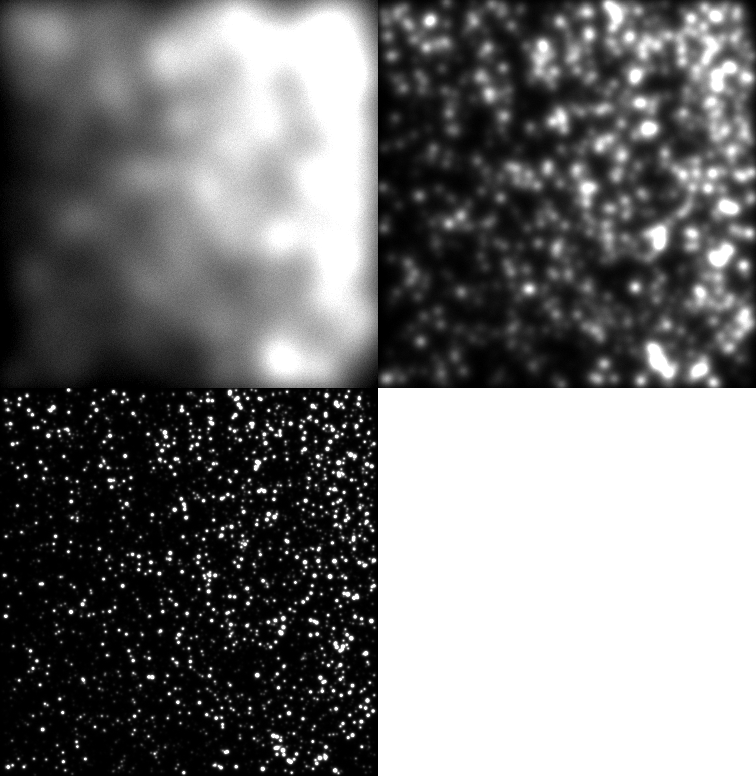
- no seeing -- images very clear
- #1) from BG, stars ~3 arcsec
across
- #2) from Hawaii, stars ~0.5 arcsec
across
- #3) with HST, stars 0.1 arcsec
across:
- no clouds
- no light pollution
- glow of city lights in
sky
- can see in UV and IR too
Disadvantages:
- expensive
- difficult to fix
Reading for Fri Oct
8:
- Sec. 19-1 (pp. 406-412): Solar System
Origin Theories
Andy Layden, Fall 2004.